Aug 26, 2015

Pirates of Silicon Valley

   Pirates of Silicon Valley is a 1999 film directed by Martin Burke. It is based on the book "Fire in the Valley: The Making of the Personal Computer" by Paul Freiberger and Michael Swaine. It was released in June 20, 1999. It stars Noah Wyle as Steve Jobs and Anthony Hall as Bill Gates.
   The film narrates the creation of the PC's and the past of both Steve Jobs and Bill Gates, as they build the first personal computers and they fundate Apple Inc. and Microsoft. It shows us the history to know how the current technology and their main corporations were created.

Plot

   The film starts with the 1984 Apple's advertisement announcing the first Macintosh computer. It then shows Steve Jobs in a conference in which he is announcing a new deal with Microsoft in 1997. In this scene, Bill Gates is compared to the "Big Brother" from the book "1984" from George Orwell. The following scenes in the movie are flashbacks to important moments in the process of creation of both companies. Steve Wozniak, played by Joey Slotnick, is the main narrator of the whole movie. The film concentrates more on Jobs, rather than Gates, who yet is not excluded.
   The main characters are portrayed along the movie as intelligent and competitive, with the idea that they will change the world. This can be seen in one of the first scenes of the movie, set on the riots from 1971 in the University of Berkley, when Jobs says "Those guys think they're revolutionaries. They're not revolutionaries, we are.". Both characters try their best to impose over the other companies and to revolutionize the world with their personal computers. That's why we are shown throughout the movie that Jobs and Gates steal each others ideas in some occasions, allowing Bill to become superior and become one of the richest men in the world. Some downsides from both characters are shown in the movie, such as Jobs, who in a scene is seen criticizing angrily his programmers who fall asleep after having been working for 50 hours straight. On the other hand, Bill Gates is portrayed as somebody with no creativity nor conscience who succeeds through theft.
   The movie ends with Jobs reconciliation with his daughter Lisa, who he didn't recognize as his in a first instance. Moreover, Steve returns to Apple and is shown in the MacWorldExpo from 1997 with Bill Gates' appearance.

Opinion

I believe this movie has managed to show the long competence between the companies in an extraordinary way, by showing not only the moments in which they create personal computers but also by portraying Jobs' and Gates' personalities in a way nobody would expect. Additionally, the film shows us things that probably not many knew about their history, such as theft, Jobs lost of friends, persistance and their beginnings. However, I think that the movie could have been more interesting and funner if the scenes of the beginning had been a little more fast moving, and the director had emphasized less on Steve Jobs and had balanced the plot by showing more about Gates. Nonetheless, Pirates of Silicon Valley is very interesting and I recommend it only to those keen on the computer industry.
 
If you would like more information, you can visit the following links: IMDB, Macworld, Wikipedia, Apple's First Macintosh Commercial.

Sources

IFTTT

   IFTTT is a web-based service that allows users to create chains of simple conditional statements. It is an abreviation of "If This Then That". They are triggered on one website, and have a result in another website. This allows users to obtain a result on a website different from the one they are using in the moment. An example are the e-mails sent to administrators when somebody wants to post a comment in a blog and there's comment moderation. It allows the automatization of actions due to its simplicity and unification of operations.
   For the correct working of IFTTT you need a recipe, which is a simple connection between products and applications. There are two types of recipes: IF recipes and DO recipes.
   IF recipes run automatically in the background by using a statement "If this happens, then do this". Therefore, a simple action has to happen in order to it be triggered. On the other hand, DO recipes will only work when the user explicitly orders a product or an application to do something, by pressing a button. For example, a button could be pressed while viewing an photo album for it to be uploaded instantly to a Facebook album.
   Recipes work with a huge amount of channels, which includes Location, Camera, Weather, Notifications, Facebook, Tumblr, Blogger, eBay, Spotify, YouTube and many e-mail platforms. However, this is just a small fraction of the total, as there are over 80 different channels.
   IF and DO recipes are available in many smart devices. To install one you have to download it from the website ifttt.com. However, you must first sign up.

   If you are looking forward to knowing more about IFTTT, you can visit one of the following links: IFTTT, Wikipedia.

Sources

Aug 12, 2015

Social Engineering

Social Engineering, in the context of information security, is the phychological manipulation of people in order to get them to perform certain actions or divulge confidential information. Hackers take advantage of this to obtain personal information or to distribute malware. There are multiple techniques, they are all based on known attributes of the human thinking, known as cognitive biases. This are exploited in different combinations to steal information in various attack techniques. The main ones are the following.

Pretexting

This technique consists in inventing a scenario which has the chance that the victim will divulge the information. This often needs a setup, consisting in creating the pretext and gathering information so that it is believable and it establishes legitimacy in the mind of the target. That's why, those who use this technique must imagine questions that could be asked to them, and elaborate the lie enough so it succeeds.

Phishing

Phising is the technique in which somebody impersonates an authority in order to obtain the confidential information. Typically, the phisher sends an e-mail to a victim asking for information. Due to the fact that the e-mails sent look legitimate and from an authority, the target will provide it. It can also be done through a phone call, in which case, it is called IVR phishing. In this situations, a system calls and recreates a legitimate-sounding phone call of an institution and insitates the victim to call back. When this is done, they are asked for the information. In both cases, people are warned that if they don't follow the instructions, something will happen.

Baiting

Baiting is a technique which consists in taking advantage from human's greed, curiosity or benevolence. The attacker leaves a labelled device in a public place. Somebody will find it and, in order to satisfy their curiosity, they will connect it to a computer, thus releasing the malware, unless the computer blocks the infection. In other cases, the person will give it to an authority, who will possibly also connect it to a computer or device.

For further information, you can click one of the following links: Social Engineering (2), Hackers, Hacker Types.

Sources

Hacker Types

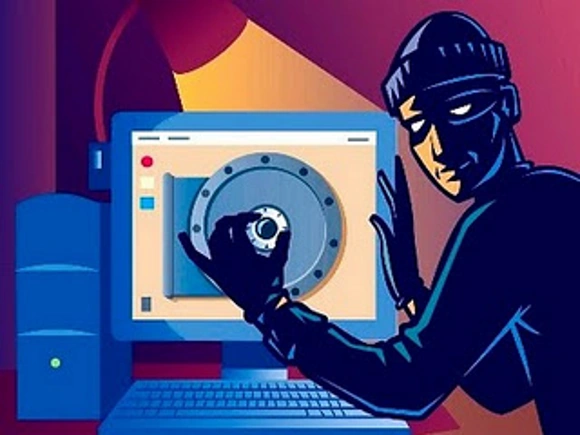
   Hackers are people who seek and exploit weaknesses in a computer system or computer network. The reason why they do this varies, it may be for a profit, joy, as a part of a challenge, to protest or as a job. According to their knowledge and objective, we can classify them in the following way.

Black Hat Hackers

   They are the computer criminals, the "bad guys". They violate security for little reason beyond maliciousness or for personal gain. They form the known stereotype, often portrayed by the community. They often look for the most vulnerable part of a code, exploit
it and gain access to a system. Moreover, they also design viruses for computers. They have a wide knowledge of computing and their main motivation is money. They receive this name because in old films, this kind of hackers would wear black hats. Sometimes they are also called Crackers.

White Hat Hackers

   This kind of hackers would often be considered the "good guys". They usually begin as Black Hats. Sometimes, they hack into a company's system and then end up being hired by it, to inform about vulnerable points in the system, in order to reinforce it and avoid any future security breaches. Banks have a bigger amount of hired White Hat Hackers, because a small bug in their system could be enough to cause huge consequences. Their job is to stop Black Hat Hackers from succeeding.

Grey Hat Hackers

   Grey Hat Hackers are the ones that are in the middle between White Hats and Black Hats. Their actions may be malicious and benevolent at the same time. They have as much knowledge as a Black Hat and, usually, this kind of hackers are people who are just starting.

Crackers

   They are included in the group of Black Hat Hackers. They are the ones who vulnerate a system and find the way to make copies of it, and offer them publicly. In other words, they make illegal copies of propietary software and distribute it freely. For example, they distribute a version of an OS or a programme. Due to the fact they allow anyone to get the cracked version, they are not making any business out of this. Therefore, the income they are getting is through publicity or advertisements. They tend to identify themselves with a nickname, and use reverse engineering to successfully hack software.

Script Kiddies

   Script Kiddies are the hackers that only have some basic knowledge. They use programmes written by others to vulnerate systems, and if they succeed, they strangely know what is going on behind the screen. They know a few things about programming but not too much, usually they will follow a tutorial they find on the internet.

Newbies

   Newbies are those who have just started hacking, they strangely succeed and if they do, they don't understand what they have done. They know just the basic of programming, they are inoffensive and they are looking for more information about hacking. In many cases, they boast about having hacked and become a Lammer, but in other cases, they look for further knowledge and become a hacker.

Lammers

   This kind of "hackers" aren't actually hackers. They are just people who say they are hackers, boast about having been able to vulnerate a piece of software following a tutorial and have no knowledge at all about programming. They are way too far from being a hacker, as they miss the knowledge and also, if they were hackers, they wouldn't be saying it publicly.

For further information, you can click on one of the following links: Hacker, Hacker Hat Colors, Hacker Types (spanish).

Sources